

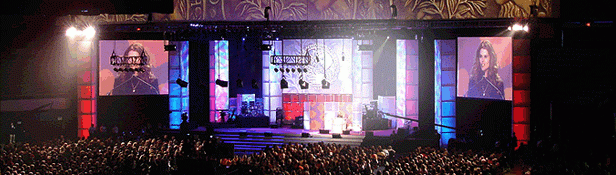
Under the leadership of California Governor Arnold Schwarzenegger and First Lady Maria Shriver, The Women’s Conference has grown from a small government initiative for working professionals into a far-reaching organization, a life-changing experience, and an international network of women from all walks of life, backgrounds and perspectives.
The Women’s Conference event is the largest and most dynamic gathering of women in the nation. Recognized for its unparalleled capacity to empower and inspire women to become architects of change, the annual conference unites more than sixty internationally-acclaimed leaders and visionaries with 14,000 women in one arena, plus thousands more virtually, to share enriching stories of transformation and success, words of encouragement and life lessons.
The evolution of women in gaming is another theme that will be discussed. Are women prevalent in eSports? In this discussion, popular brands will introduce the ultimate guide about eSports for gamblers and a comprehensive guide to the various eSports leagues around the world. Will be analyzed the progress to date and evaluate the potential for additional cooperation.
“California’s full economic potential will only be met when all women are supported in their efforts to contribute to the entrepreneurial spirit of California. WE Invest supports and empowers women and their families in this endeavor putting money in their pockets, hope in their hearts and a future in their hands.”
Night at The Village
Experience an evening for Your Mind, Your Body and Your Soul with Maria Shriver. You asked for it, and we listened! This year, we’re giving you more opportunities for book signings, networking, shopping, food and fun. Also featuring a conversation with Rachael Ray. Join us for the Night at The Village, a brand new pre-conference event.
EVENING RUNDOWN
| 5:00 pm | Doors Open | |
| 6:30-7:15 pm | Program | Giselle Fernandez, Television Journalist, Prodoucer & Filmmaker
Bob Foster, Mayor of Long Beach Kristin Gibbs, Lean Cuisine Maria Shriver, First Lady of California Roshawnda Bettencourt, 08 Poetry Out Loud Winner Rachael Ray, Chef, Entrepreneur and Television Host Valerie Bertinelli, Actress and Health and Weight-loss Activist |
| Musical performance by Janina Gavankar. Music and Lyrics by George Kieffer. |
Spice It Up Stage
Want to learn how to make a dish quickly and easily? Check out Spice It Up and hear from one of three well-known Chefs offering fun tips and recipes that will spice up your kitchen and life!
Mind, Body and Spirit Stage
Stop by Mind Body and Spirit to get tips on a variety of topics: from green living, to personal style, from the mind & body connection to being your best and of course, learning to find quiet in an increasingly noisy world. Hear from world-renown speakers on how to lift your Mind Body and Spirit!
| Spice It Up Stage | |
| 5:30-6:00 pm | Rocco DiSpirito, Chef & Author of Rocco Gets Real, his fifth book. |
| 7:30-8:00 pm | Dana Slatkin, Chef & Co-Owner of celebrated Shutters Hotel. |
| 8:30-9:00 pm | Scott Leibfried, Chef, currently appearing on FOX TV’s Hell’s Kitchen. |
| Mind, Body & Spirit Stage – Sport Events | |
| 5:30-5:50 pm | Pam Peeke, How to integrate your mind and body. |
| 6:00-5:50 pm | Jesse Garza and Joe Lupo, How to find your personal style. |
| 7:30-7:50 pm | Jillian Michaels, How to become your personal best. |
| 8:00-8:20 pm | Lisa and Ron Beres, How to live a green life. |
| 8:30-8:50 pm | Bingo night, dances and drinks |
The Women’s Conference is a non-profit, non-partisan organization led by California First Lady Maria Shriver and her belief in the “power of WE.” As a “conference with a conscience,” the conference has formed partnerships, developed programs, and supported initiatives — in California and beyond — to extend the inspiration of the conference beyond the day-long event and empower women everywhere.
WE Invest – Women’s Economic Empowerment Program
WE Invest is a women’s economic empowerment program, which supports organizations that provide women and families of the state with tools and resources needed to achieve financial self-sufficiency.
WE Care – Women’s Health Empowerment Program
WE Care is a women’s health empowerment program, which supports the work of CARE International, a leading humanitarian organization, to save the lives of thousands of pregnant women in Africa and Latin America.
The Minerva Awards – WE Honor
Named after the Roman goddess who graces the state’s seal, The Minerva Awards were founded in 2004 by First Lady Maria Shriver. Each year, five remarkable women are honored on the main stage of The Women’s Conference for stepping forward in the spirit of Minerva and changing their country with their courage, strength and wisdom.
The Minerva Leadership Program – WE Lead
The Minerva Leadership Program seeks to inspire, educate and empower young women leaders between the ages of 16 and 22 who are civically oriented and socially conscious.
The Minerva Military Families Program – WE Support
The Minerva Military Families Program provides prepaid calling cards and other resources to deployed troops with families in California.
The Minerva Scholarship Program – WE Educate
The Minerva Scholarship Program recognizes and assists outstanding California women in their pursuit of higher education.